 By
By The worship of natural forces during the Vedic Period was not random or purely religious—it was deeply connected to the way people lived, thought, and interacted with their environment. Their beliefs developed from practical needs, observation of nature, and early attempts to understand the world.
Complete Dependence on Nature
Vedic people lived a life that was heavily dependent on nature for survival. Their economy was based on cattle rearing and later agriculture, which required rain, fertile soil, sunlight, and water. Since these natural elements directly affected their food supply and daily life, they were considered powerful and essential. For example, rain was associated with Indra, fire with Agni, and the sun with Surya. Worshipping them was a way to ensure survival and prosperity.
Fear of Natural Powers
Natural forces such as storms, floods, droughts, and lightning could be both beneficial and destructive. Since people could not control or predict these events, they developed a sense of fear and respect toward them. Worship became a way to calm these forces and seek protection. For instance, thunder and lightning were seen as expressions of divine power, and prayers were offered to avoid disasters.
Lack of Scientific Knowledge
At that time, there were no scientific explanations for natural events like rainfall, eclipses, or seasonal changes. Early humans tried to interpret these phenomena through imagination and belief systems. They assumed that unseen divine beings controlled these forces. This led to the personification of nature—turning natural elements into gods with human-like qualities, emotions, and powers.
Expression of Gratitude and Respect
Worship was not only driven by fear but also by gratitude. When people experienced good harvests, sufficient rainfall, and peaceful conditions, they believed these were blessings from the gods. They expressed their thankfulness through prayers, hymns, and offerings mentioned in the Rigveda. This created a sense of respect and harmony between humans and nature.
Importance of Rituals (Yajnas)
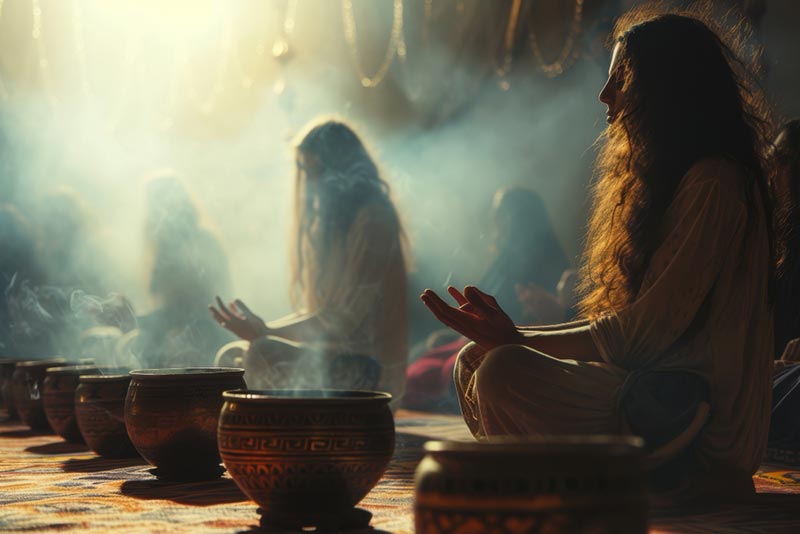
Rituals, especially fire sacrifices (Yajnas), were central to Vedic religion. Fire, represented by Agni, was believed to act as a messenger between humans and gods. Offerings like ghee, grains, and other items were placed into the fire so that they could reach the gods. These rituals were performed to please natural forces, seek blessings, and maintain balance in the universe.
Close Relationship with the Environment
The Vedic people lived in forests, near rivers, and open lands, which kept them in constant contact with nature. Their daily experiences—sunrise, rainfall, seasons, and rivers—shaped their beliefs. Unlike modern urban life, they directly felt the impact of nature, making it central to their spiritual life.
Beginning of Religious Thought
The worship of natural forces also marks the early stage of religious development in India. Initially, religion was simple and based on nature worship. Over time, especially in the Later Vedic Period, these beliefs evolved into more complex rituals and philosophical ideas, eventually leading to deeper concepts found in texts like the Upanishads.
Conclusion
In conclusion, the worship of natural forces during the Vedic Period was a natural response to human needs, fears, and curiosity. It combined dependence on nature, lack of scientific understanding, emotional connection, and a desire for harmony. This form of worship laid the foundation for later religious and philosophical developments in Indian civilization.