 By
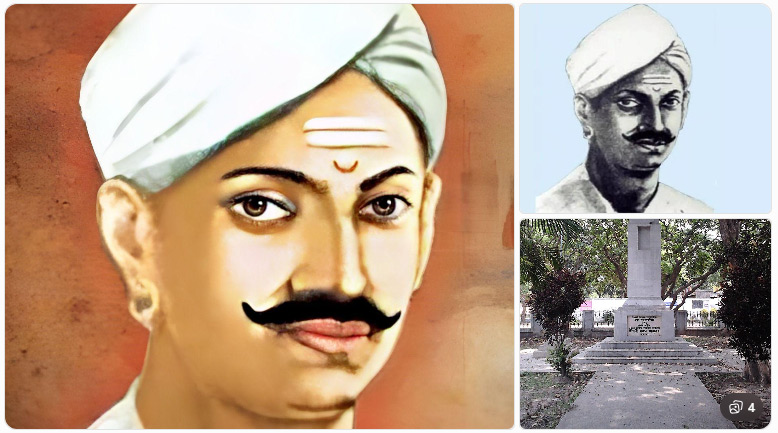
Mangal Pandey
Born: 19 July 1827
Birthplace: Nagwa
Died: 8 April 1857
Occupation: Soldier (Sepoy) in the East India Company army, 34th Bengal Native Infantry.
Early Life
Mangal Pandey was born into a Brahmin family in Nagwa village (present-day Uttar Pradesh). He joined the East India Company’s Bengal Army as a young man and was posted at the Barrackpore cantonment.
Important Role in India’s Freedom Struggle
Mangal Pandey is widely remembered as one of the earliest heroes of India’s struggle against British rule. His actions in 1857 became a powerful symbol of resistance and helped inspire what became the Indian Rebellion of 1857, also known as the First War of Independence by many Indians.
1. Protest Against the Enfield Rifle
The British introduced the new Enfield rifle, whose cartridges were rumored to be greased with cow and pig fat.
- Hindu soldiers considered the use of cow fat religiously offensive.
- Muslim soldiers objected to pig fat for religious reasons.
- Soldiers had to bite open the cartridges before loading the rifle, causing widespread anger.
2. Revolt at Barrackpore
On 29 March 1857, at the Barrackpore military cantonment, Mangal Pandey openly challenged British officers.
He:
- Refused to use the new cartridges.
- Attacked British officers.
- Urged fellow Indian soldiers to rise against British rule.
Although many soldiers hesitated to join him immediately, his defiance became a rallying point for future rebels.
3. Arrest and Execution
After the incident, Mangal Pandey was arrested by the British authorities.
He was executed by hanging on 8 April 1857, earlier than originally planned because the British feared his influence would encourage further rebellion.
4. Inspiration for the Revolt of 1857
Just weeks after his execution, the uprising spread rapidly across northern and central India to places such as Meerut, Delhi, Kanpur, and Lucknow.
His courage inspired thousands of Indian soldiers and civilians to join the revolt.
Why Mangal Pandey is Important
- He was among the first Indian soldiers to openly rebel against British authority.
- His actions became the spark that helped ignite the 1857 uprising.
- He became a symbol of courage, patriotism, and resistance against colonial rule.
- He is remembered as one of the earliest martyrs of India’s freedom movement.